Waste carrier licence check in Scotland: the SEPA register
Scotland has its own regulator, register and number format. How to check a waste carrier on SEPA's register and what to look for.

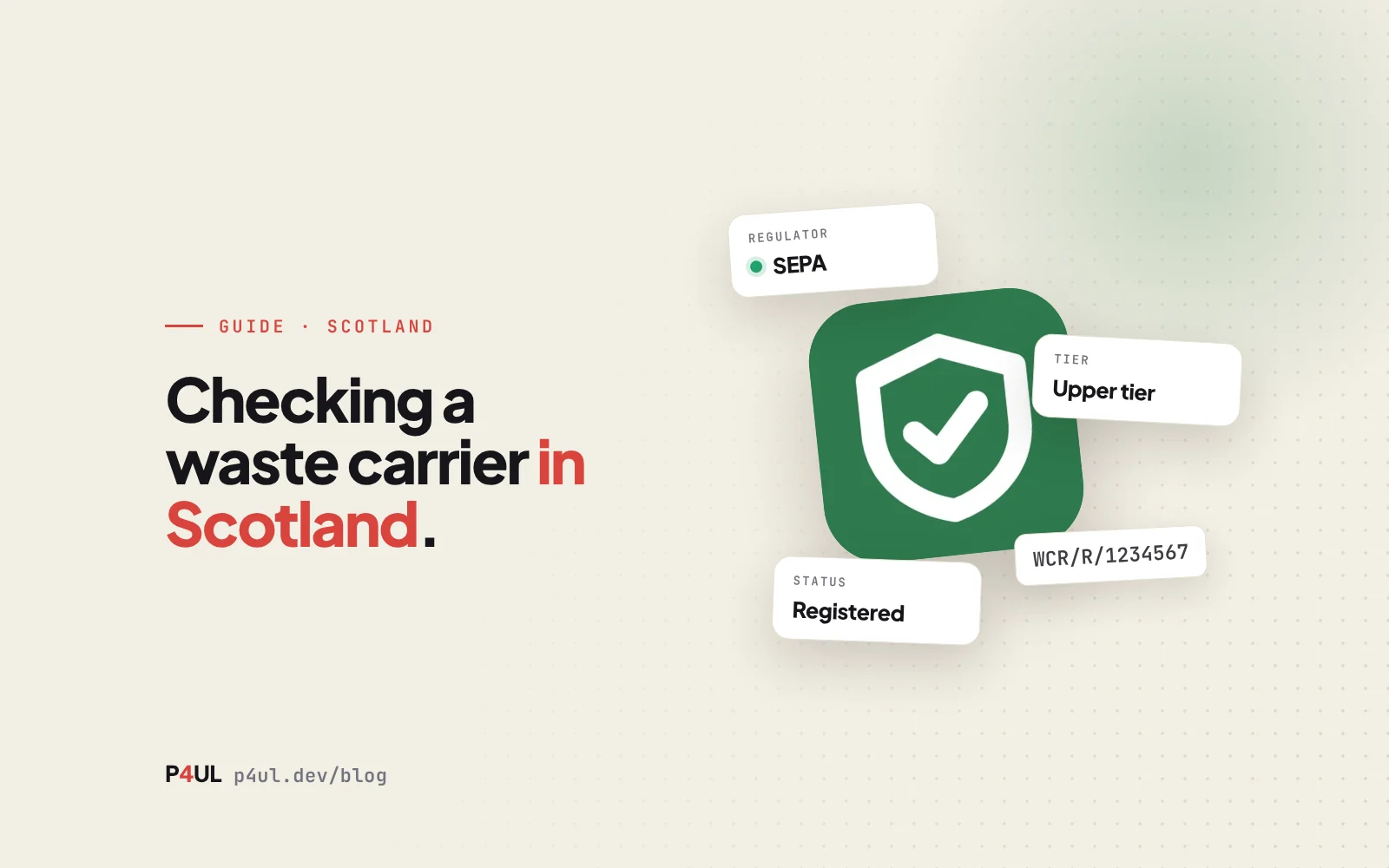
Most guides to checking a waste carrier are written for England and quietly assume the Environment Agency register is the only one. It isn't. If the carrier is based in Scotland they're registered with SEPA, the Scottish Environment Protection Agency, and an Environment Agency search will come back empty - which is not the same as "not registered".
Which register, which regulator
A carrier registers with the regulator for the nation where their business is based, regardless of where they collect. So:
- A Perth firm clearing a house in Perth - SEPA.
- A Carlisle firm clearing a house in Dumfries - Environment Agency (England).
- A Glasgow skip company working in Glasgow - SEPA.
If you only check one register you'll get false negatives. Waste Carrier Check searches all four UK registers in one go for exactly this reason.
Using SEPA's register
SEPA publishes its register of waste carriers and brokers online; search for "SEPA waste carriers register" and you'll find it. You can search by business name or registration number. The experience is functional rather than friendly - it's a database view, and name searches are fussy about exact spelling and trading names.
What you're looking for on the record:
- The name matches the business you're dealing with, or its trading name.
- Tier: upper tier for anyone taking your waste away for money. More on tiers here.
- Status and expiry: registration is current and hasn't lapsed.
What a SEPA number looks like
SEPA registration numbers use a WCR prefix (waste carrier registration), unlike the CBDU/CBDL numbers used in England and Wales. If someone in Scotland gives you a CBDU number, they're either an English business or they've given you someone else's number - check which.
Your duty of care in Scotland
The duty of care applies in Scotland just as it does in England: if you hand waste to someone who isn't registered and it's fly-tipped, you can be held responsible. Councils and SEPA can issue fixed penalties for fly-tipping and failure to take reasonable steps, and Scotland has been tightening up on this. The practical protection is the same everywhere - check the register, keep a note of who took it and when, and get a receipt or transfer note.
Enforcement history
SEPA publishes enforcement information separately from the register, so a carrier can be "registered" and still have a history. For businesses doing regular checks, this is worth a look; Waste Carrier Check pulls public enforcement records into the same result so you don't have to go hunting.
Keeping a record
For a householder, a screenshot of the register entry and the receipt is enough. For a business, you need a waste transfer note for every load and evidence that you checked the carrier. Waste Carrier Check Pro exports a dated PDF of each check for your transfer file - what the register said, and when you looked.
Not an official SEPA tool, to be clear. It reads the same public register you can - just alongside the other three.